Posted on Leave a comment

Best AR-15 Uppers for 2026: Why the Piston Operating System is Revolutionizing AR Uppers

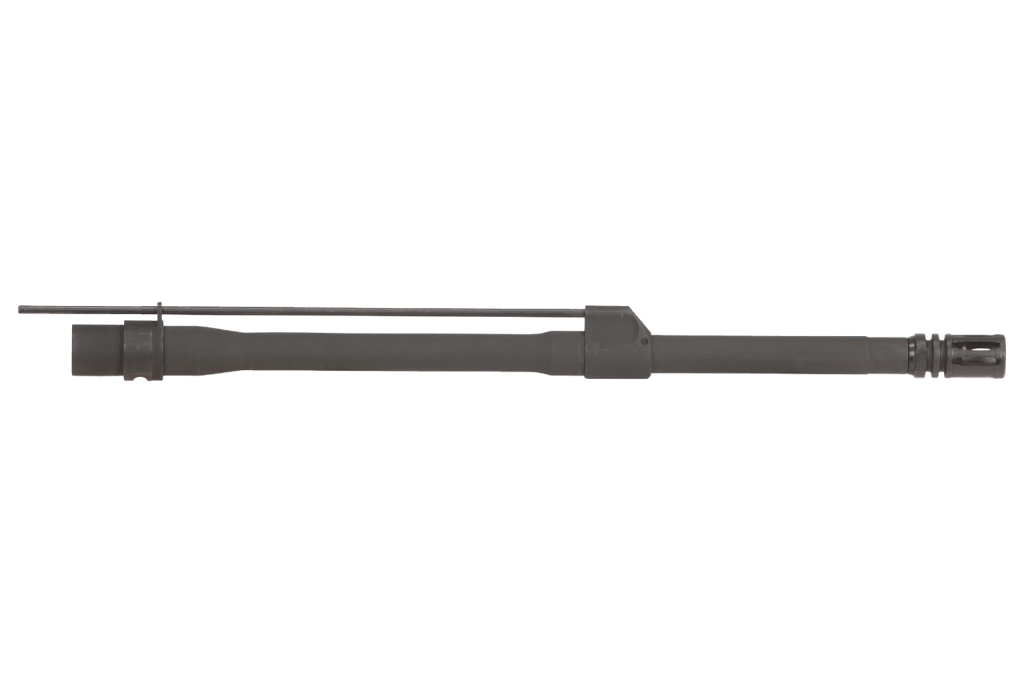
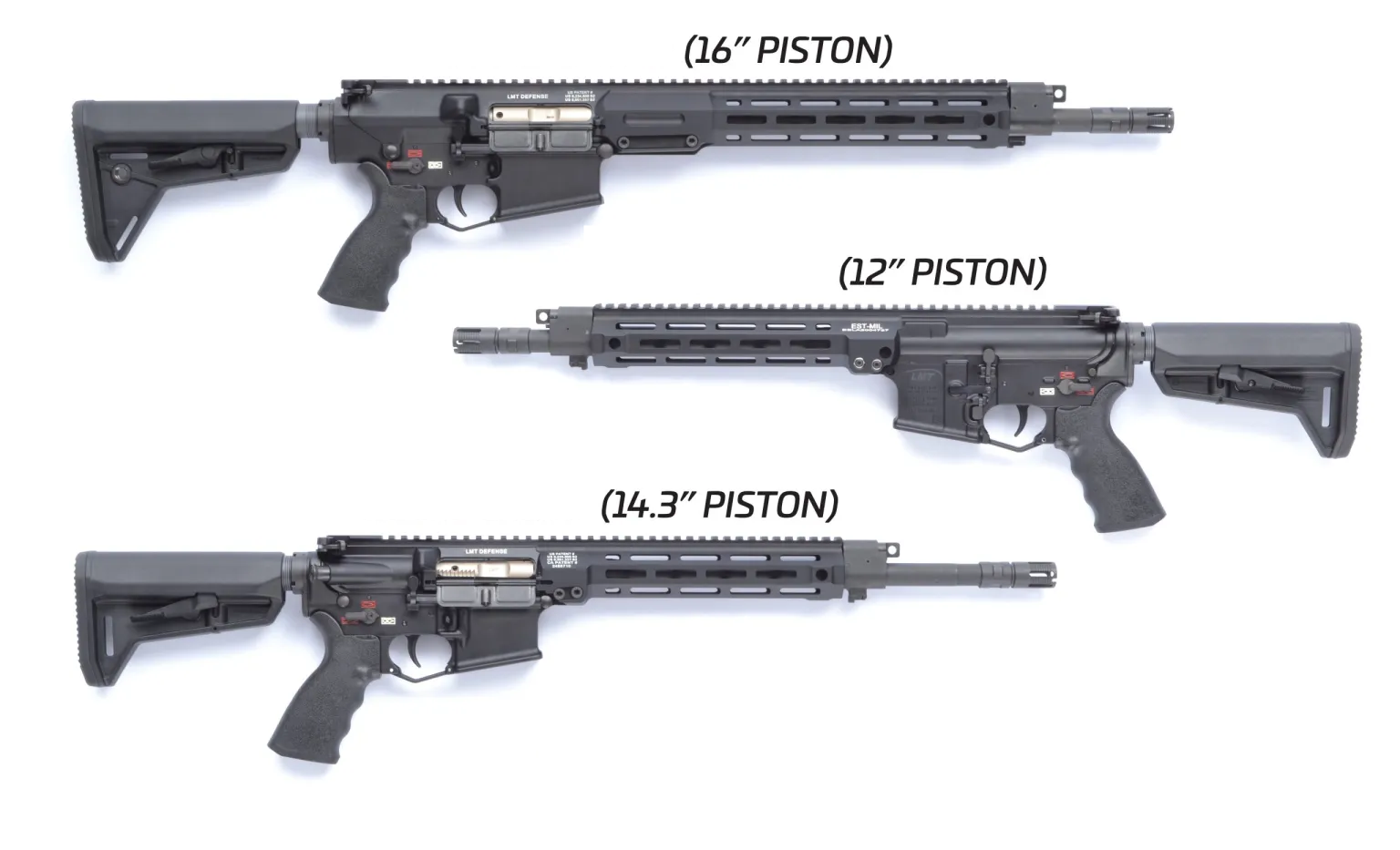
In the ever-evolving world of AR-15 rifles, finding the best AR-15 upper for 2026 means looking beyond traditional designs. As firearm enthusiasts and professionals seek more reliable, durable, and efficient systems, the piston operating system stands out as a game-changer. Unlike the classic direct impingement (DI) method, piston-driven AR uppers offer superior performance in demanding conditions. At Krinkov.com, where we specialize in high-quality AR parts and accessories, we’re excited to highlight piston technology. Let’s dive into why piston AR uppers, exemplified by the LMT 16″ Piston Chrome Lined 5.56×45 (.223) barrel, are a top choice for 2026.

Understanding the Piston Operating System in AR15 Uppers

The AR-15 platform has long relied on direct impingement, where hot gases from the fired round are funneled directly back into the receiver to cycle the action. This system is lightweight and affordable, contributing to its popularity in entry-level AR uppers. However, it has drawbacks: the gases introduce carbon fouling and heat directly into the bolt carrier group, leading to faster wear, increased maintenance, and potential reliability issues in dirty or suppressed environments.

Enter the piston operating system, which uses a piston rod to drive the action instead of venting gases into the receiver. This design keeps the internals cleaner, runs cooler, and enhances reliability, key factors for the best AR15 uppers in 2026. Piston systems excel in adverse conditions, with less fouling and heat buildup, making them more robust for extended use. While DI uppers might offer smoother recoil and slightly better accuracy due to their lighter weight, piston AR uppers prioritize durability and minimal maintenance . Piston systems are gaining traction in tier lists for top AR uppers. For those searching for the best AR15 parts kits or upgrades, piston technology is a must-consider for future-proofing your build.

Spotlight on the LMT 16″ Piston Chrome Lined 5.56×45 (.223) Barrel

A prime example of piston excellence is the LMT 16″ Piston Chrome Lined 5.56×45 (.223) 1:7″ RH twist barrel, designed specifically for the LMT monolithic receiver (MRP). This barrel features a mid-length gas system with an adjustable piston block, ensuring optimal cycling. Crafted from chromoly steel with a chrome-lined bore, it’s coated and cryogenically treated for exceptional longevity, resisting wear even under heavy use.

This setup makes it a standout for top AR upper 2026, offering versatility for both carbine and rifle configurations. Whether you’re building a new AR or upgrading an existing one, this barrel integrates seamlessly with M-LOK rails and other modern accessories available at Krinkov.com.

Why Piston AR Uppers Are the Future for 2026 and Beyond

Looking ahead, the best AR-15 uppers for 2026 will prioritize systems that handle modern demands like suppressors, high-round counts, and harsh environments without constant cleaning. Piston designs like LMT’s reduce recoil impulse slightly more than DI in some setups, though they add minimal weight, a trade-off worth it for enhanced reliability. Piston technology is poised to dominate search results, especially as more shooters discover its benefits over traditional DI.

At Krinkov.com, we stock a wide range of AR-15 upper receivers, parts, and accessories to help you assemble the ultimate piston-driven setup. Whether you’re after new AR-15 upper receivers on sale or essential upgrades, piston systems ensure your rifle is ready for whatever 2026 brings. Upgrade today and experience the difference in your next AR-15 build.
Posted on Leave a comment

Best LMT® AR-15 Uppers 2025: MRP® Monolithic Rail Platform, Cryogenic Barrels & Enhanced BCG Guide

At Krinkov.com, your go to source for premium AR-15/M16 parts, tactical rifle accessories, and high-quality upgrades for military grade performance, we’re always on the hunt for the best gear to recommend to our customers. Specializing in everything from AR-15 complete uppers to AK-47 parts, magazines, and optics, we know what serious shooters demand: reliability, precision, and innovation. 

That’s why we’re spotlighting Lewis Machine & Tool (LMT®) AR-15 uppers in this 2025 guide. As a trusted manufacturer since 1980, LMT® delivers battle-proven firearms and components for law enforcement, military, and enthusiasts alike.  Whether you’re building a lightweight AR-15 upper or seeking the ultimate in AR-15 complete uppers 556/223, LMT’s lineup—including the patented MRP® monolithic upper, cryogenically treated barrels, and enhanced bolt carrier groups (BCGs)—stands out for its superior engineering.

LMT® MRP® Monolithic Rail Platform: The Ultimate AR-15 Upper Receiver for Modularity and Zero Retention

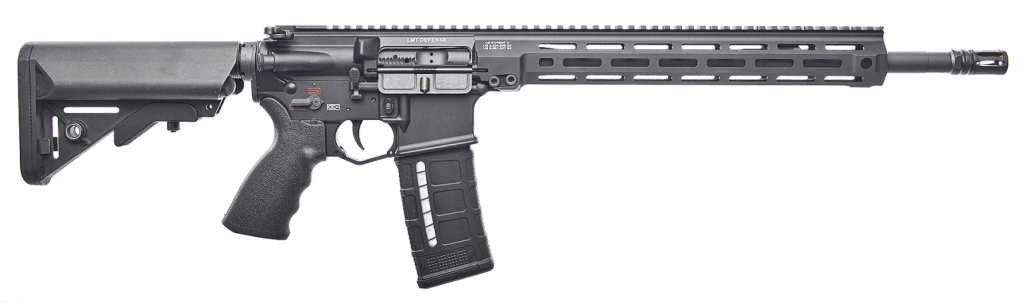
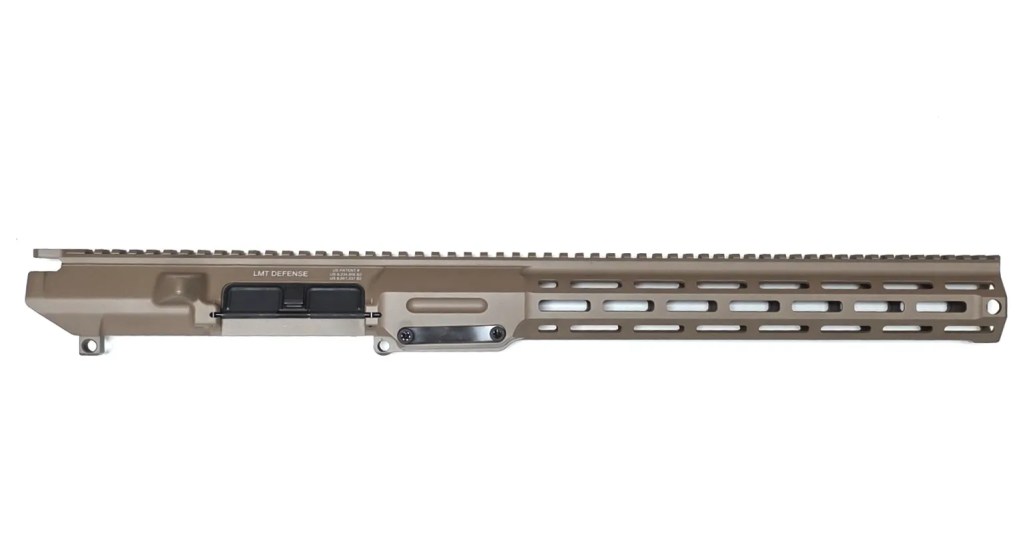
When it comes to one of the best AR-15 upper receivers 2025, the LMT® Monolithic Rail Platform (MRP®) is a game-changer. This patented design integrates the upper receiver and handguard into a single piece of forged aerospace-grade aluminum, eliminating flex, misalignment, and the need for separate components.  Unlike traditional two-piece setups, the MRP® provides unmatched rigidity, making it ideal for maintaining optic zero, even after quick barrel swaps or heavy use.

Shooters often search for modularity, and LMT® delivers with its quick-change barrel system. Switch from a 10.5″ carbine to an 18″ rifle-length barrel in minutes using just two bolts, and your scopes or red dots hold zero without re-zeroing.  Available in M-LOK, these uppers offer full accessory compatibility for lights, grips, and bipods.  For shooters chasing lightweight AR-15 upper performance, the MRP’s one-piece construction reduces weight while boosting accuracy, perfect for competition, home defense, or tactical operations.

At Krinkov.com, we stock a wide array of AR-15 parts to complement your LMT® MRP® build. If you’re searching for mil-spec AR-15 upper styles, the MRP® exemplifies modern innovation in tactical rifle parts.

Cryogenically Treated Barrels: Enhanced Durability and Accuracy for AR-15 Builds

One of the most sought out features for AR-15 complete uppers 556/223 is barrel quality, and LMT’s cryogenic treatment sets a high bar. This process involves cooling barrels to around -300°F using liquid nitrogen, then slowly warming them to relieve internal stresses and refine the metal structure.  Unlike cold hammer forging (CHF), LMT’s cryogenic stress-relieving applies to all barrels, chrome lined or stainless, improving wear resistance, heat dissipation, and longevity without quenching. 

Why does this matter to be considered one of the best AR-15 barrels 2025? The treatment minimizes barrel harmonics, reduces fouling, and enhances accuracy over thousands of rounds, even in high-heat scenarios.  Shooters report tighter groups and extended service life, making it ideal for suppressed setups or rapid fire. If we look at AR-15 barrel performance, cryogenic barrels shine for their balance of precision and reliability, key for any tactical rifle upgrade.

Pair one with Krinkov.com’s selection of AR-15 lower parts or AR-15 upper parts for a build that’s ready to outperform the competition.

LMT® Enhanced BCG: Bulletproof Reliability for High-Performance AR Uppers

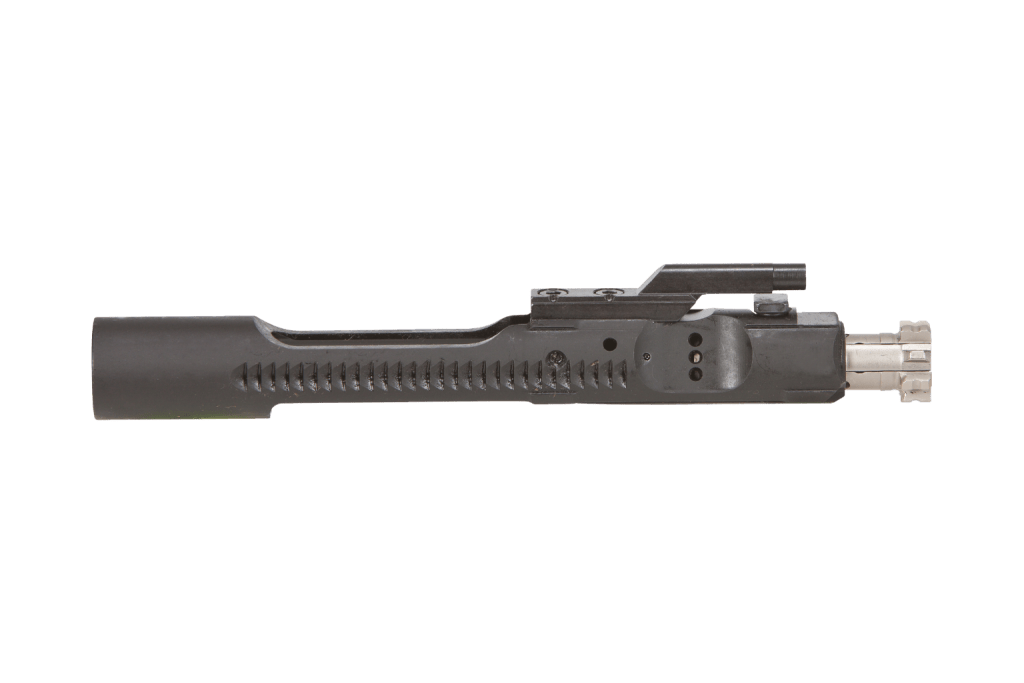
No best AR-15 BCG upgrades 2025 list is complete without LMT’s enhanced bolt carrier group. Engineered for extreme conditions, this BCG features a lobed carrier for smoother gas flow, dual extractor springs for reliable casing grip, additional gas vents to reduce blowback, and proprietary coatings for friction reduction and corrosion resistance. 

Optimized for suppressed fire, short-barreled rifles, and full-auto rates, the enhanced BCG minimizes malfunctions like extraction failures, delivering ultimate reliability in demanding environments.  Users praise its near-infinite lug life and bombproof design, outlasting standard BCGs in high-round-count scenarios.  For those searching for AR-15 enhanced BCG reliability, LMT’s version is a top pick, especially when paired with the MRP® upper for seamless cycling.

At Krinkov.com, we offer compatible AR-15/AR-10 accessories to enhance your LMT® setup, ensuring your rifle runs flawlessly.

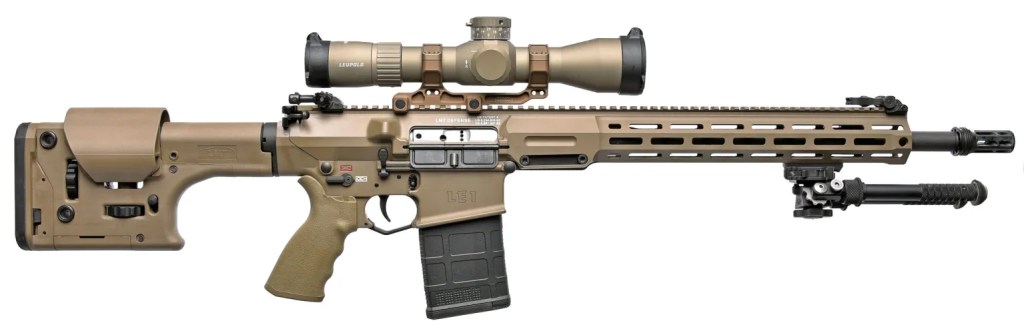
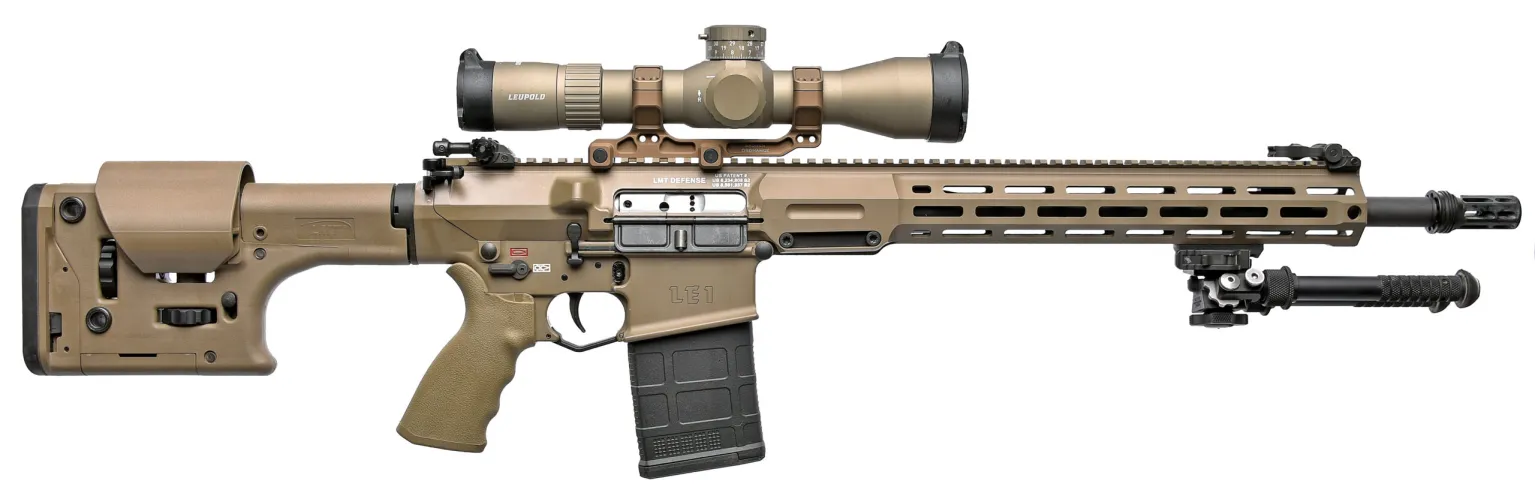
A tactical rifle with a flat dark earth finish, featuring a precision scope mounted on top, a collapsible stock, and a handguard with ventilated rail system.
LMT L129A2 UK MINISTRY OF DEFENSE RIFLE 6.5CM

LMT® Allied Military Contracts

Lewis Machine & Tool (LMT®) has secured significant contracts with the U.S. Department of Defense, U.S. Special Operations Command. Internationally, LMT® supplies various rifles and weapons systems to several allied nations, such as New Zealand Defence Force and Estonian Defence Forces, Swiss Armed Forces, British Armed Forces, and to Jordan’s Public Security Directorate.

Why Choose LMT® AR Uppers from Krinkov.com?

In a world of great AR-15 uppers , LMT® combines cryogenic barrels for longevity, the MRP® monolithic upper for optic stability, and enhanced BCGs for unmatched reliability, making them essential tactical rifle parts. Whether you’re after lightweight AR-15/AR-10 upper parts or AR-15/AR-10 complete uppers 556 or .308, LMT® makes a great choice.

Browse Krinkov.com for AR-15/M16 AR-10 parts, magazines, and more to build your dream rifle. Always check local laws for compliance.  Upgrade today.

Posted on Leave a comment

Taliban Ministry Uses Krinkov Nickname in Official Weapons Seizure Report – Highlighting the Global Legacy of the AKS-74U Krinkov

A recent official report from the Taliban Ministry of Interior casually drops the iconic slang term “Krinkov” when referring to the legendary Soviet AKS-74U carbine.

In a November 2025 English-language post shared widely on social media, the Taliban detailed a successful weapons seizure operation in Paktia Province, Afghanistan. Security forces intercepted a smuggling attempt from a neighboring country, recovering an arsenal that included 34 pistols, four M4 rifles, four Kalashnikovs, one Krinkov, and one M4-style pistol. The use of the term “Krinkov” – a nickname that originated as Soviet-era slang for the compact AKS-74U – in an official Taliban communication has sparked fascination among firearms enthusiasts worldwide.

The Enduring Legend of the AKS-74U Krinkov

The AKS-74U Krinkov, originally developed for Soviet vehicle crews, special forces, and airborne troops needing a ultra-compact yet reliable 5.45x39mm platform, quickly became a global icon. Its short barrel, folding stock, and rugged AK reliability made it a favorite in close-quarters scenarios.

Over decades, the Krinkov nickname transcended its Soviet roots, entering international firearms culture – from video games and movies to real-world use by various armed groups. The Taliban’s adoption of the term in formal reporting underscores how deeply embedded “Krinkov” has become in global gun lexicon, even in regions far removed from its origins.

Why the Krinkov Remains Relevant in 2025

While newer compact platforms like Kalashnikov’s AM-17 and PPK-20 are entering production to succeed the classic AKS-74U Krinkov, the original’s influence endures. Recent reports of seized Krinkovs in conflict zones highlight the weapon’s persistent appeal for its simplicity and effectiveness.

Disclaimer

The information presented in this article is for informational and educational purposes only and does not constitute legal advice. Firearms laws, including those governing the National Firearms Act (NFA), short-barreled rifles (SBRs), and related accessories, vary by jurisdiction and are subject to frequent change. Readers are strongly encouraged to consult qualified legal counsel and relevant federal, state, and local authorities for guidance specific to their situation before purchasing, assembling, or using any firearm or accessory discussed herein. Krinkov.com assumes no liability for any actions taken based on the content of this article.


Shop Krinkov.com for the Best Gun Parts and Tactical Gear

Explore our massive inventory today:

– Extensive selection of rifle and handgun parts including AK-specific upgrades

– Durable polymer holsters and concealed carry options

– Top-tier scopes, sights, and optics for enhanced performance

Posted on 1 Comment

The PPK-20: Kalashnikov’s Compact Evolution in 9mm Firepower

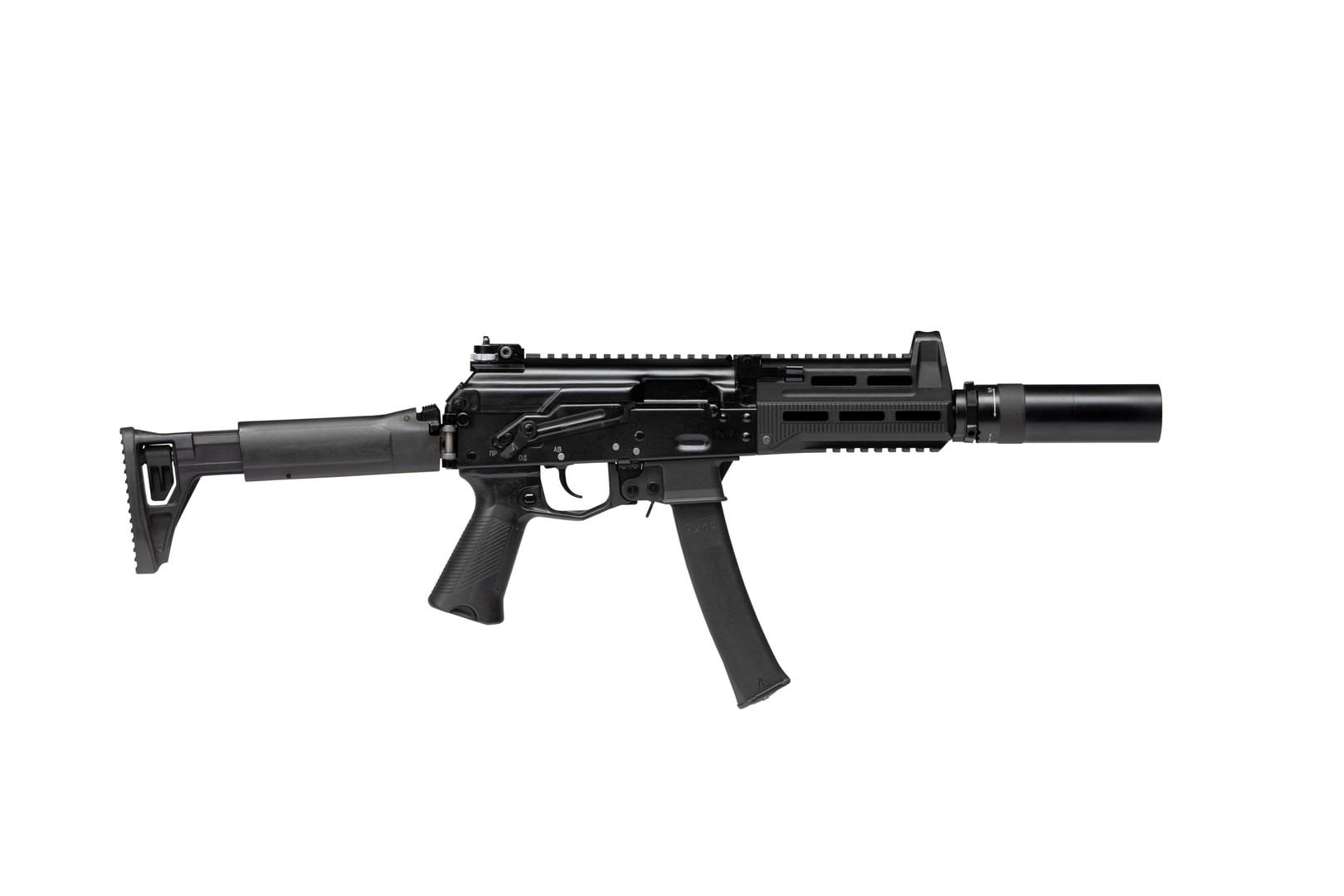
In the ever-evolving landscape of modern small arms, the Kalashnikov Concern has introduced the PPK-20 submachine gun as a pinnacle of compact lethality and ergonomic refinement. Unveiled at the ARMY-2021 International Military-Technical Forum, this 9×19mm Parabellum firearm represents a deliberate upgrade to the venerable PP-19 Vityaz-SN, infusing it with the battle-proven reliability and user-centric design principles of the AK-12 assault rifle family. Designed primarily as a personal defense weapon (PDW) for pilots, armored vehicle crews, special operations forces, and law enforcement units operating in confined urban environments or high-threat scenarios, the PPK-20 excels in close-quarters battle (CQB) where maneuverability and rapid deployment are paramount. Following successful state trials, it has entered mass production, positioning it as a versatile addition to Russia’s Ratnik combat system.

At its core, the PPK-20 embodies Kalashnikov’s hallmark durability while shedding unnecessary bulk for enhanced portability. Chambered in the ubiquitous 9×19mm cartridge—with the high-performance 7N21 armor-piercing round as its primary ammunition—it accommodates all standard variants of the caliber, ensuring logistical simplicity across diverse operational theaters. The weapon’s gas-operated, rotating bolt mechanism delivers consistent performance, with a selective-fire capability supporting both semi-automatic and fully automatic modes at a practical rate of fire tailored for controlled bursts.

Technical Specifications

The PPK-20’s subcompact footprint belies its tactical prowess, making it an ideal companion for operators who prioritize stealth and speed over extended-range engagements:

  • Overall Length: 600–660 mm (adjustable via telescoping stock)
  • Barrel Length: 182 mm
  • Weight (Unloaded): 2.6 kg
  • Cartridge: 9×19 mm Parabellum
  • Magazine Capacity: 30 rounds (compatible with standard Vityaz-SN magazines)
  • Effective Range: Optimized for 50–100 meters in CQB
  • Muzzle Velocity: Approximately 360–380 m/s (dependent on ammunition)
  • Sights: Adjustable diopter rear sight; front post sight
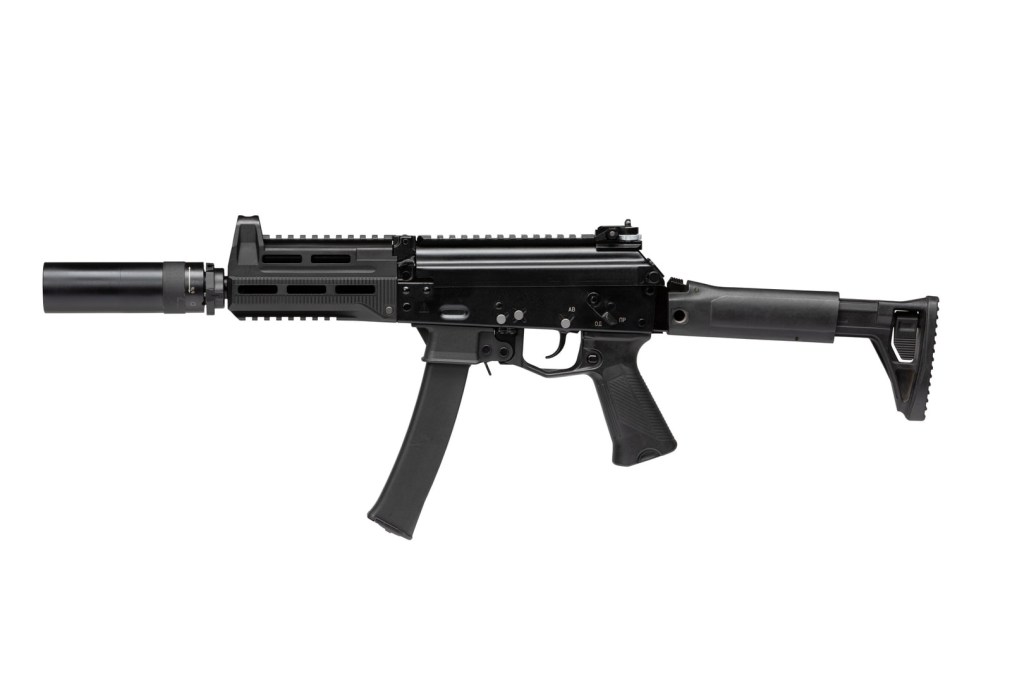
A black PPK-20 submachine gun with a suppressor attached, featuring a telescopic stock and Picatinny rail for mounting accessories.

(Source: http://www.KalashnikovGroup.ru)

These dimensions translate to a folded length of around 475 mm, allowing the PPK-20 to be stowed effortlessly in vehicle compartments or aircraft cockpits without compromising accessibility.

Key Features and Innovations

What sets the PPK-20 apart from its predecessors is a suite of modern enhancements that prioritize the end-user’s comfort and adaptability. The folding, telescopic polymer buttstock—adjustable in length and folding to the right—provides a customizable cheek weld and shoulder fit, reducing fatigue during prolonged engagements. Complementing this is an ergonomic pistol grip drawn from the Ratnik series, contoured for natural hand placement and reduced recoil impulse.

Ambidexterity is a cornerstone of the design, with a reversible fire selector switch that enables seamless operation for left- or right-handed shooters. The upper receiver’s dust cover and the integrated handguard feature extended Picatinny rails (MIL-STD-1913), facilitating the attachment of optics, lasers, lights, or foregrips to suit mission-specific needs. For suppressed operations, an optional quick-detachable sound and flash suppressor integrates effortlessly, minimizing signature in covert scenarios without altering the weapon’s zero.

Constructed from high-strength polymers reinforced with steel components, the PPK-20 achieves its featherweight profile without sacrificing the legendary Kalashnikov robustness against environmental extremes—be it mud, sand, or arctic cold. Its compact receiver and shortened barrel maintain ballistic efficiency for point-target neutralization, while the overall system ensures reliable feeding and ejection even under rapid fire.

Operational Context and Adoption

Tailored for the demands of contemporary warfare, the PPK-20 serves as more than a mere sidearm; it is a scalable platform for elite units navigating building clears, vehicle extractions, or crowd-control duties. Its compatibility with existing 9mm ecosystems within Russian forces streamlines training and supply chains, while the modular rail system future-proofs it for emerging accessories.

As of its integration into service, the PPK-20 has garnered acclaim for bridging the gap between pistol-caliber carbines and full assault rifles, offering special forces a lightweight alternative to bulkier 5.45mm platforms. Kalashnikov’s engineers emphasize its role in empowering “the downed pilot” or isolated crewman with suppressive fire capability until reinforcements arrive. With ongoing refinements based on field feedback, the PPK-20 not only honors the legacy of Viktor Mikhailovich Kalashnikov—after whom a variant is named—but also advances the submachine gun genre into the 21st century, proving that true innovation lies in refining the essentials.

Posted on 1 Comment

Overview of the AM-17M Rifle

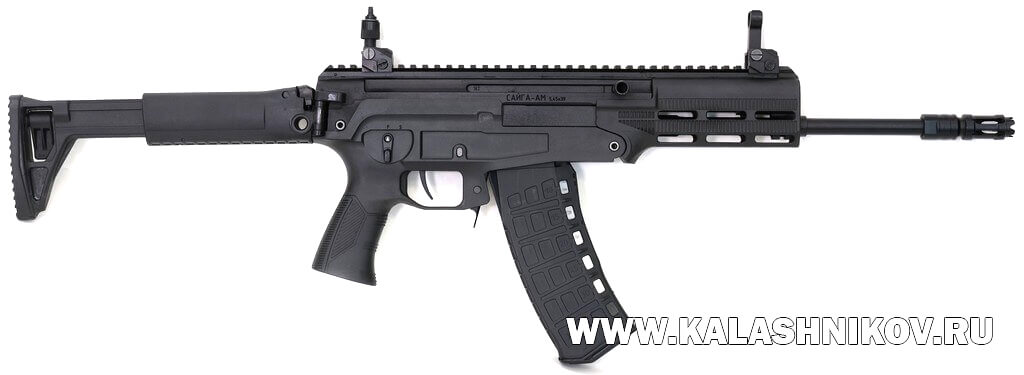
The AM-17M is an experimental full-length assault rifle variant in the ongoing development of Kalashnikov Concern’s AM-17 family. Unlike the compact AM-17 (GRAU index 6P74), which entered pilot production in September 2025 as a modern successor to the AKS-74U “Krinkov,” the AM-17M extends the platform into a standard-issue rifle role. It aims to provide a lighter, more ergonomic alternative to the AK-12 while sharing the same modular, polymer-heavy design roots from Yevgeny Dragunov’s 1970s MA prototype. As of December 2025, the AM-17M remains in prototype stages, with no confirmed adoption or production timeline, though it’s part of Kalashnikov’s broader push to create a “Russian SCAR”-like modular rifle system. Prototypes have been tested alongside the AM-17 in Ukraine’s SVO zone, focusing on reliability in extreme conditions.

Development emphasizes reduced weight (about 0.5 kg lighter than the AK-12 with a comparable barrel), improved recoil management via a short-stroke gas piston, and enhanced modularity for optics and accessories. It retains compatibility with existing 5.45×39mm ammo and AK-74 magazines, making it a cost-effective upgrade path for Russian forces.

Key Specifications

While full official specs are limited due to its prototype status, here’s a comparison based on available data against the AM-17 compact and AK-12 baseline:

FeatureAM-17M (Prototype)AM-17 (Compact)AK-12 (Current Standard)
Caliber5.45×39mm (variants in 7.62×39mm, 5.56×45mm NATO planned)5.45×39mm5.45×39mm
ActionGas-operated, short-stroke piston, rotary boltGas-operated, short-stroke piston, rotary boltGas-operated, long-stroke piston
Weight (Unloaded)~3.0 kg (6.6 lbs, estimated)2.5 kg (5.5 lbs)3.5 kg (7.7 lbs)
Length (Stock Extended)~940 mm (37″)740 mm (29.1″)922 mm (36.3″)
Barrel Length415 mm (16.3″)280 mm (11″)415 mm (16.3″)
Effective Range500 m400 m500 m
Rate of Fire~800 rpm~800 rpm600–700 rpm
Magazine Capacity30 rounds (AK-74 compatible)30 rounds (AK-74 compatible)30 rounds (AK-74 compatible)
Muzzle Velocity~900 m/s~735 m/s~900 m/s
SightsFull-length Picatinny rail; adjustable ironFull-length Picatinny rail; adjustable ironAdjustable iron; optional rails
StockTelescoping, side-folding polymerTelescoping, side-folding polymerTelescoping polymer
Key FeaturesAmbidextrous controls; polymer receivers with aluminum/steel reinforcements; stable rail for optics; reduced recoilSame as AM-17M but compact-focusedTraditional AK ergonomics; higher recoil

The AM-17M’s design features a hinged upper/lower receiver for quick disassembly, ambidextrous charging handle and fire selector, and a heat-shielded handguard. Its short-stroke system minimizes bolt carrier friction, improving full-auto stability and barrel life compared to long-stroke AKs. Future variants could include civilian “hunting” models or suppressed options, expanding the family’s calibers.

Development Status and Future Prospects

  • Origins: Evolved from the AM-17’s 2017 debut; full AM-17M prototypes built during 2024 state trials.
  • Testing: Combat-evaluated in SVO for ergonomics and durability; refinements include better polymer composites for weight savings.
  • Production: No mass rollout yet—focus remains on AM-17 batches for FSB/National Guard. Kalashnikov aims for family-wide adoption by 2030 if trials succeed, potentially replacing AK-12 in select units.
  • Challenges: Must prove superior reliability in Russian army mud/sand tests; critics note it’s “innovative but late” to global trends like AR-15 modularity.
The AM-17M is an experimental full-length assault rifle with a sleek design, featuring a telescoping stock, standard Picatinny rail, and compatibility with 5.45×39mm ammunition.

(Source: http://www.Kalashnikov.ru)

For visuals, prototypes show a sleeker profile than the AK-12, with extended barrel and rail. If adopted, it could mark a shift from Kalashnikov’s long-stroke legacy toward more Western-inspired designs.

Posted on Leave a comment

Kalashnikov Launches Production of AM-17 Assault Rifle to Succeed the AKS-74U

Kalashnikov’s AM-17: Reviving a Soviet Relic to Modernize Russia’s Compact Arsenal

In a bold nod to its storied past, Russia’s Kalashnikov Concern has rolled out the first pilot batch of the AM-17—a sleek, updated compact rifle designed to sideline the venerable but dated AKS-74U. Unveiled on September 1, 2025, via the company’s Telegram channel, this revival of a 1970s prototype signals Moscow’s push to refine its small-arms lineup amid ongoing global tensions. With trials completed and initial deliveries underway, the AM-17 could soon arm Russian security forces and frontline troops, blending Cold War roots with contemporary tweaks for urban and vehicle-based warfare.

From Forgotten Prototype to Frontline Contender

The AM-17’s journey began in the late 1970s, when Soviet engineers at the Tula Design Bureau—led by Yevgeny Dragunov, famed for the SVD sniper rifle—crafted the original MA prototype. This innovative compact assault rifle aimed to equip paratroopers and armored crews with a lightweight 5.45×39mm weapon that packed more punch than submachine guns but fit in tighter spaces than full rifles. However, it fell short in reliability during head-to-head trials against Mikhail Kalashnikov’s AKS-74U, which won adoption in 1979 for its rugged simplicity and production ease.

Fast-forward to the 2020s: Kalashnikov dusted off the MA concept in response to demands for a true personal defense weapon (PDW). First teased in October 2024, the AM-17 underwent rigorous state and military testing, including real-world combat evaluations in Ukraine. Refinements addressed the prototype’s historical flaws—think improved gas systems and corrosion resistance—paving the way for serial production. While positioned as the AKS-74U’s heir, experts note that full-scale rollout might lag, given Russia’s stretched logistics and the Krinkov’s (as the AKS-74U is slangily known) entrenched popularity among Spetsnaz and Wagner operators.

Tech Breakdown: Lighter, Smarter, and Ready for Mods

At its core, the AM-17 stays true to Russian doctrine: reliable, mass-producible, and brutally effective up close. Chambered in the ubiquitous 5.45×39mm round, it tips the scales at just 2.5 kg unloaded—slimmer than the AKS-74U’s 2.7 kg—thanks to high-strength polymers replacing much of the steel. Folded, it shrinks to under 500 mm for stashing in a tank hatch or chopper seat; extended via its telescopic stock, it stretches to 750 mm for better handling.

Key specs highlight its evolution:

FeatureAM-17 SpecificationAKS-74U (for Comparison)
Caliber5.45×39mm5.45×39mm
Weight (Unloaded)2.5 kg2.7 kg
Length (Folded/Extended)<500 mm / 750 mm490 mm / 730 mm
Barrel Length~200 mm (estimated)206.5 mm
Cyclic Rate~850 rpm~700 rpm
Magazine30-round detachable30-round detachable
Operating SystemShort-stroke gas pistonShort-stroke gas piston
Sights/AccessoriesPicatinny rails for optics/lightsBasic iron sights

The rifle’s ambidextrous fire selector and ergonomic grip make it friendlier for lefties and prolonged use, while the boosted fire rate suits suppressive fire in close quarters. Unlike the AKS-74U’s infamous muzzle flash and overheating woes, the AM-17’s refined gas port and polymer heat shields promise cooler operation after sustained bursts.

Close-up view of the AM-17 compact assault rifle held by a person, showcasing its modern design and features.

Russia’s AM-17 Rifle—A detailed view of the AM-17 compact assault rifle chambered in 5.45×39 mm. (Source: Kalashnikov Concern)

Out with the Old: Why Ditch the AKS-74U?

The AKS-74U, or “Krinkov,” has been a Soviet/Russian staple since 1979, arming everyone from Afghan mujahideen captives to modern-day bodyguards. Its compact 8-inch barrel and side-folding stock made it a hit for non-infantry roles, but age shows: reduced accuracy beyond 200 meters, brutal recoil from the short gas system, and a lack of modularity in an era of red-dot sights and suppressors. Kalashnikov’s own trials revealed the Krinkov’s limitations in prolonged urban fights, like those in Syria and Ukraine.

The AM-17 steps in as a direct upgrade—lighter by 7%, more accessory-friendly, and battle-tested. Initial batches have shipped to an undisclosed client, with Russian defense outlets speculating it’s the Armed Forces. Broader adoption could accelerate if it proves itself in 2026 exercises, potentially phasing out 100,000+ aging AKS-74Us by decade’s end.

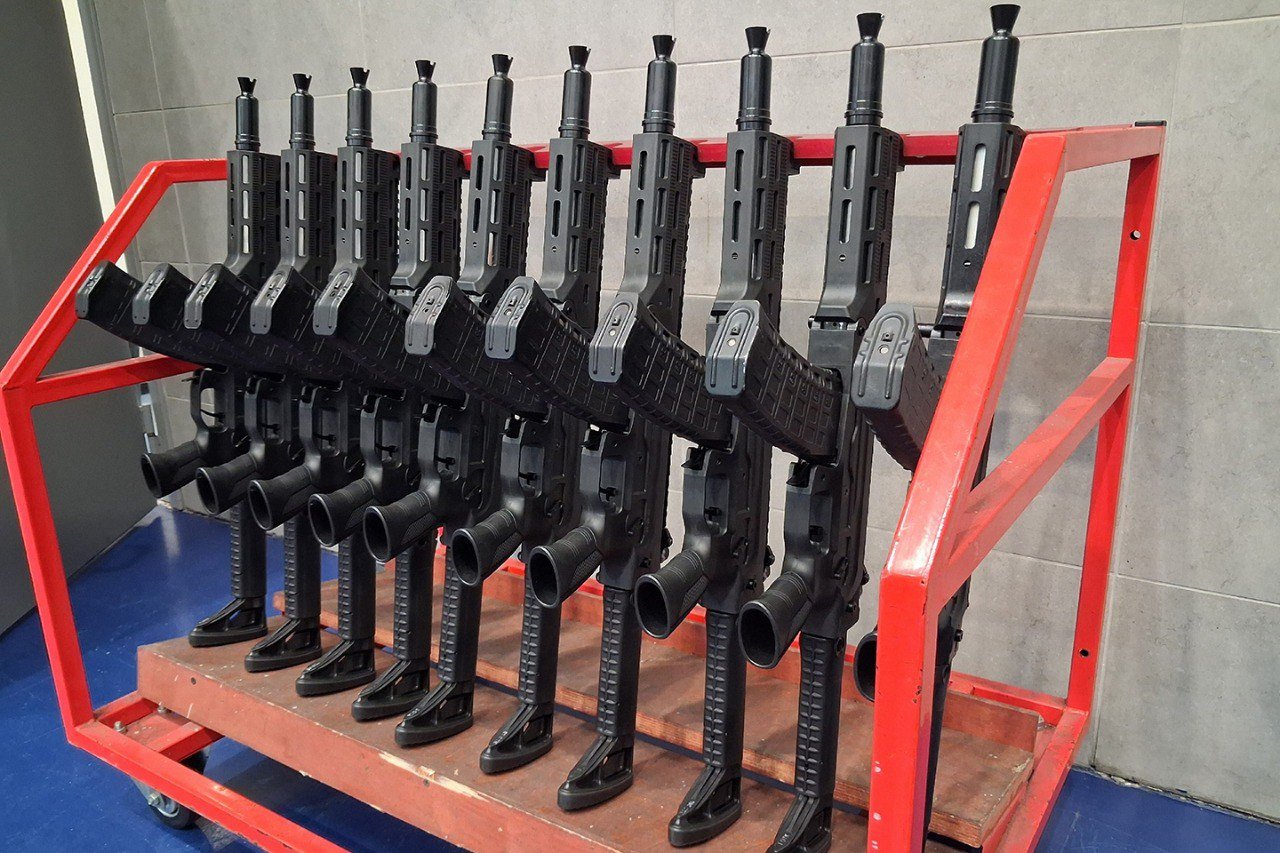
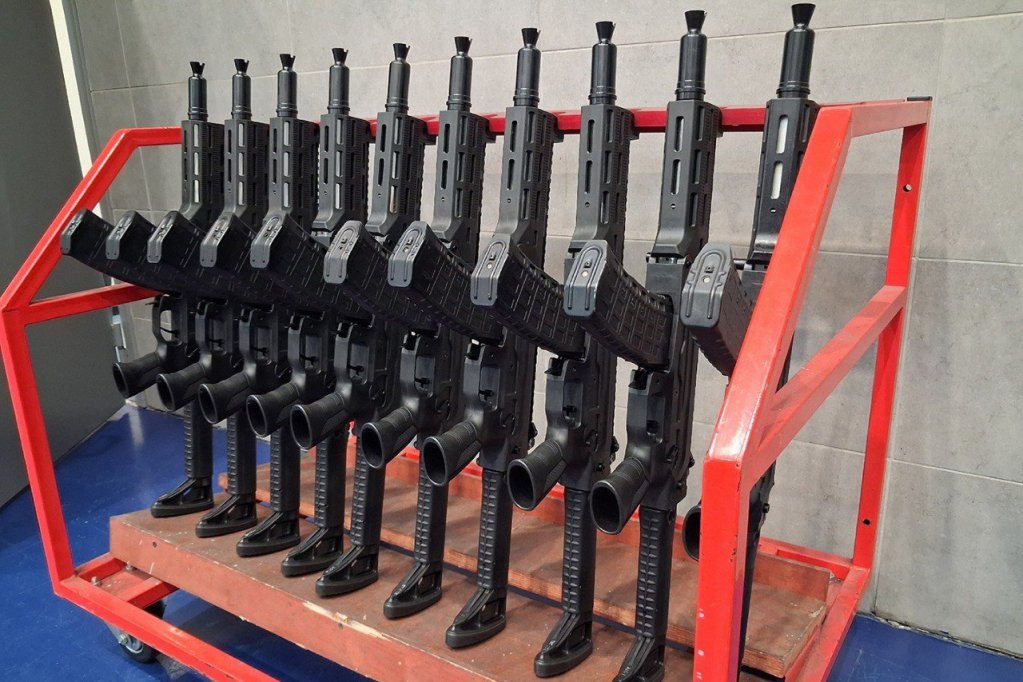
Rows of freshly assembled AM-17 compact assault rifles displayed on a rack at Kalashnikov's facility.

AM-17 Production Batch Freshly assembled AM-17s on the rack at Kalashnikov’s facility. (Image: Kalashnikov Concern)

Broader Implications: A Shift in Small-Arms Strategy

This revival underscores Kalashnikov’s pivot toward hybrid designs—merging legacy reliability with NATO-inspired features like full-length rails—while dodging full Western overhauls. Exports loom large too; at around $1,000 per unit, the AM-17 could appeal to allies like India or Belarus seeking affordable PDWs.

Contrast this with Ukraine’s trajectory: Having ditched Soviet relics, Kyiv’s forces now favor the homegrown UAR-15, an AR-15 clone lauded for its 30% weight savings, pinpoint accuracy, and seamless integration with Western ammo and optics. As Russia refines its AM-17, it highlights a stark divide: one side iterating on the past, the other embracing the future.

For firearms enthusiasts and analysts alike, the AM-17 isn’t just a rifle—it’s a snapshot of Russia’s adaptive edge in a multipolar world. Keep an eye on Izhevsk; the next batch might redefine compact firepower.